Warhol or Wahloo?
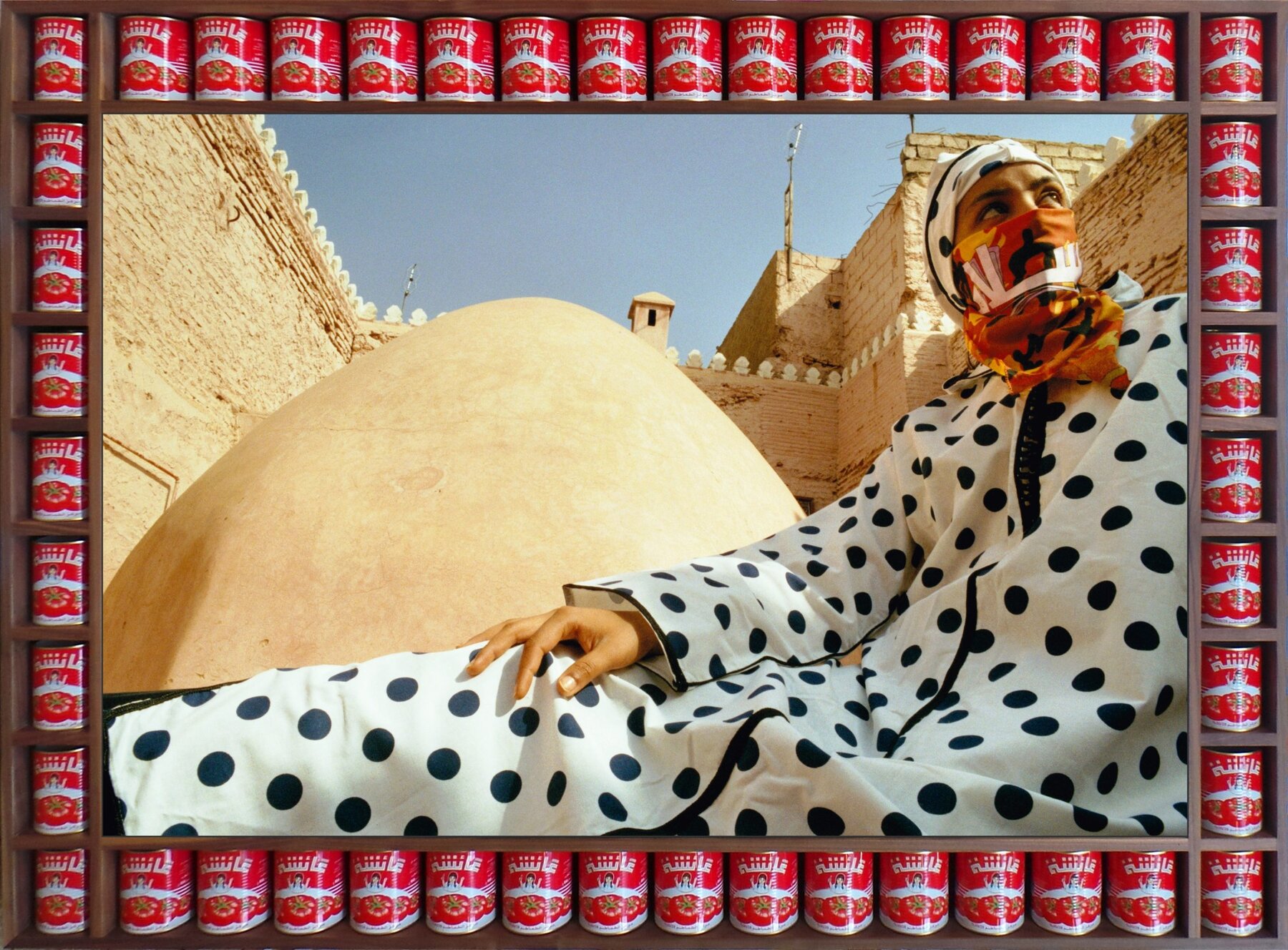
Andy Warhol, the American Pop artist who turned supermarket packaging into gallery icons, silkscreened the Campbell's soup can because it stood for the cold anonymity of American capitalism: an object made to be consumed and forgotten. Hajjaj frames his portraits in harissa tins, tomato paste cans, olive jars, soda labels, and counterfeit monograms. These are not anonymous industrial objects; they are the material of Moroccan home life, carrying the texture of the souk, the smell of a particular kitchen shelf, the weight of small economies held together across generations. Repeated into rows around the portrait, the cans and labels fall into the geometry of zellij tilework, absorbing Western corporate logos into a North African frame. Where Warhol documented the emptiness inside the commodity, Hajjaj inherits the souk and builds an archive of survival from it.
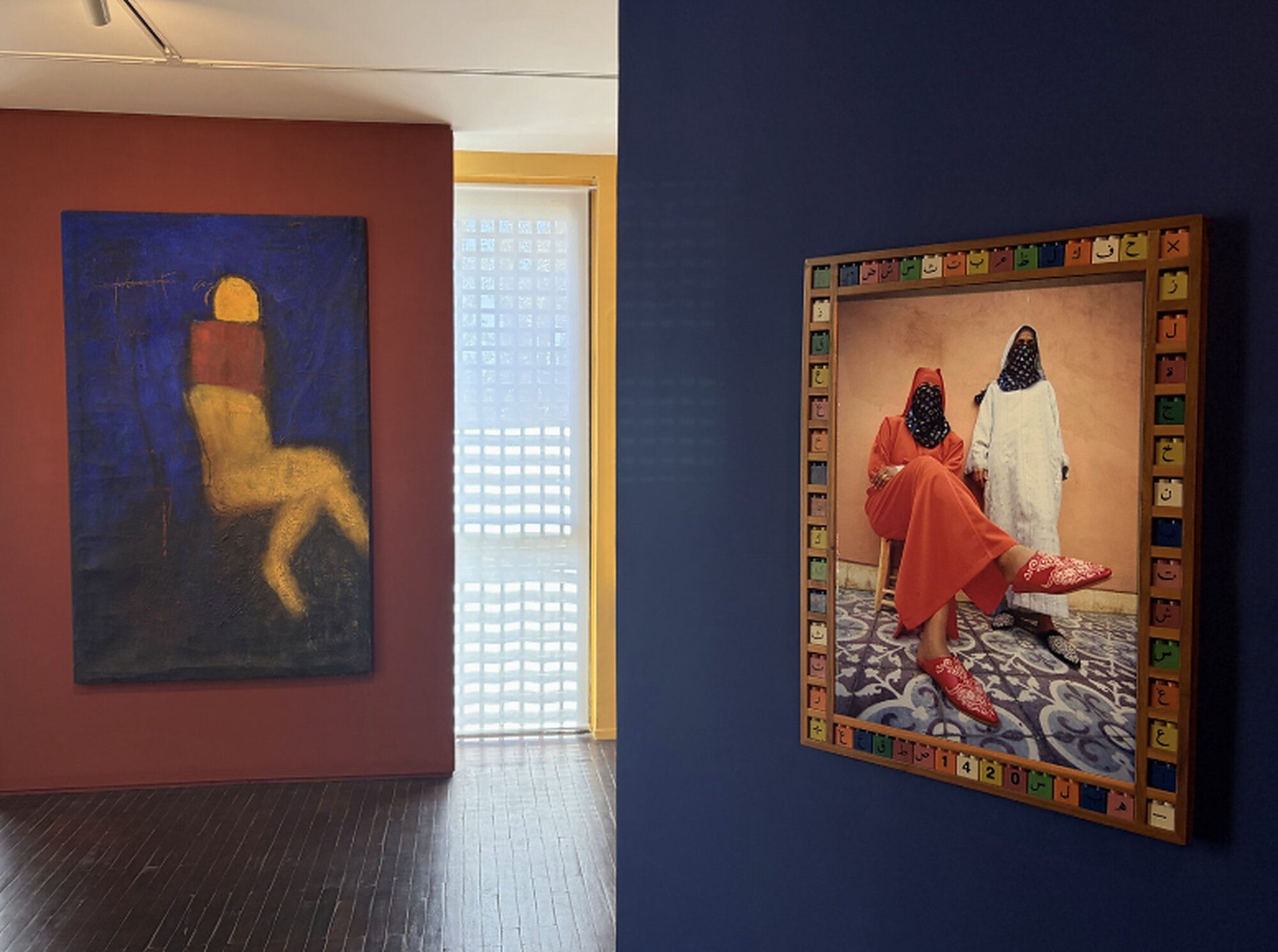
I came to Hajjaj's work before I came to his name. It was hanging at MACAAL, the Museum of African Contemporary Art Al Maaden in Marrakech, in a group show called Seven Contours, One Collection, where his photography sat beside an untitled painting from the 2 series by the Marrakech-born artist Mahi Binebine and the Spanish painter Miguel Galanda. What stopped me was the pairing, and a quiet rhyme inside it: both figures sit cross-legged, grounded and unhurried, present without performing it. Binebine and Galanda reach across two cultures through abstraction: Galanda's dramatic Spanish expressionism folded into Binebine's faceless, vulnerable figure, built up in wax and pigment around a single person sitting still. Hajjaj's portrait answers from the opposite direction, arriving at the same meeting point through surface rather than abstraction: the soft yellow babouche, the polka-dot djellaba, the frame of Arabic alphabet blocks, the counterfeit textiles and market branding he rearranges into a language that refuses to be flattened into exotic export. Standing between the two works, I understood the argument before I could name the artist making it.
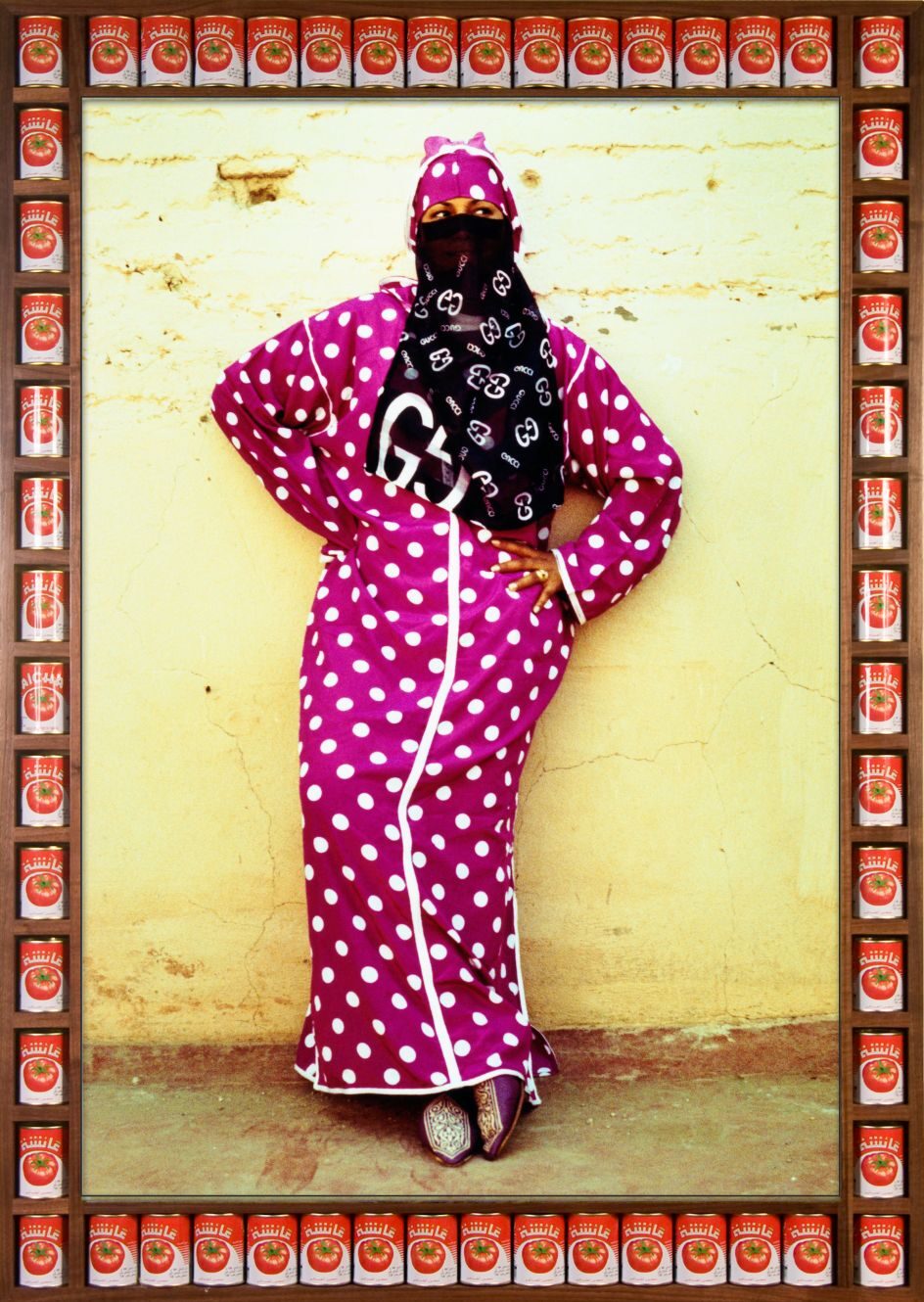
This is survival aesthetics. London made him as much as Marrakech did: the seventies clubs, the street culture, the post-punk eye for self-styling are all in his gaze. But his lineage does not run through Warhol; it runs through African studio photography. In the mid-century portrait studios of West Africa, ordinary people dressed in their best and posed against bold patterned backdrops, and the photographer turned them into icons. Its most celebrated figure is the Malian photographer Malick Sidibé, and like Sidibé, Hajjaj builds outdoor studios directly on the asphalt, where friends, musicians, merchants, athletes, and strangers become monumental through styling, repetition, posture, and gaze. In series like VOGUE, The Arab Issue, he borrows the glossy surface of the high-fashion shoot to frame Moroccan women and friends, handing his subjects the cool, fierce agency that Orientalist photography had always denied them. Nothing in the frame is improvised: Hajjaj designs and sews the outfits himself, matching pattern to pattern and colour to colour, down to the embroidered babouche, the polka-dot veil, and the trim on a sleeve, until each subject is dressed head to toe in a single deliberate world. The clothing itself carries the politics: counterfeit luxury logos tailored into traditional Moroccan dress, the global label and the local garment worn as one. The image does not mourn the collision of local and global culture; it takes the mixing for granted and rearranges it on its own terms.
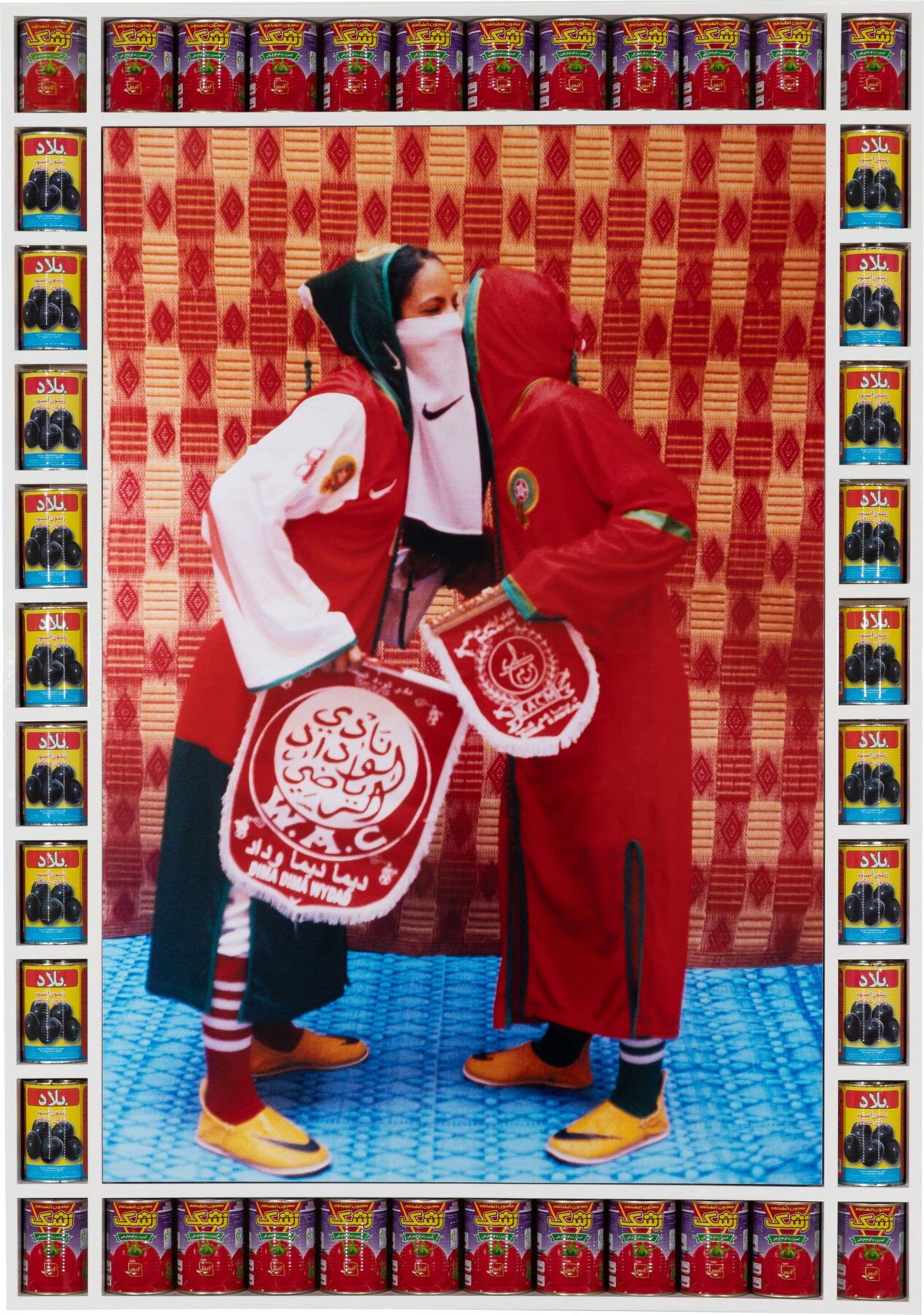
To stand in front of a Hajjaj portrait is to stand inside a souk. The medina at noon is not a backdrop in his work, it is the structure: the vendor calling three prices in two languages, the tomato-paste pyramid stacked beside a bootleg Vuitton scarf, babouches piled next to football jerseys, harissa tins sharing a shelf with a counterfeit Chanel monogram. The souk does not separate high from low, sacred from disposable. Everything is arranged for the eye, everything is for sale, everything is loved. His frames carry that exact arithmetic: the portrait sits inside borders built from labels that argue with each other in real life, on the same shelf, in the same hand, so that what looks like a jumble of borrowed logos is in fact accurate citation. And the imitation luxury inside it is not a joke at the West's expense, it is everyday souk vocabulary; when Hajjaj lifts it off the market rail and re-tailors it into something monumental, he quietly strips the Western luxury label of its power.
AlUla, 1445
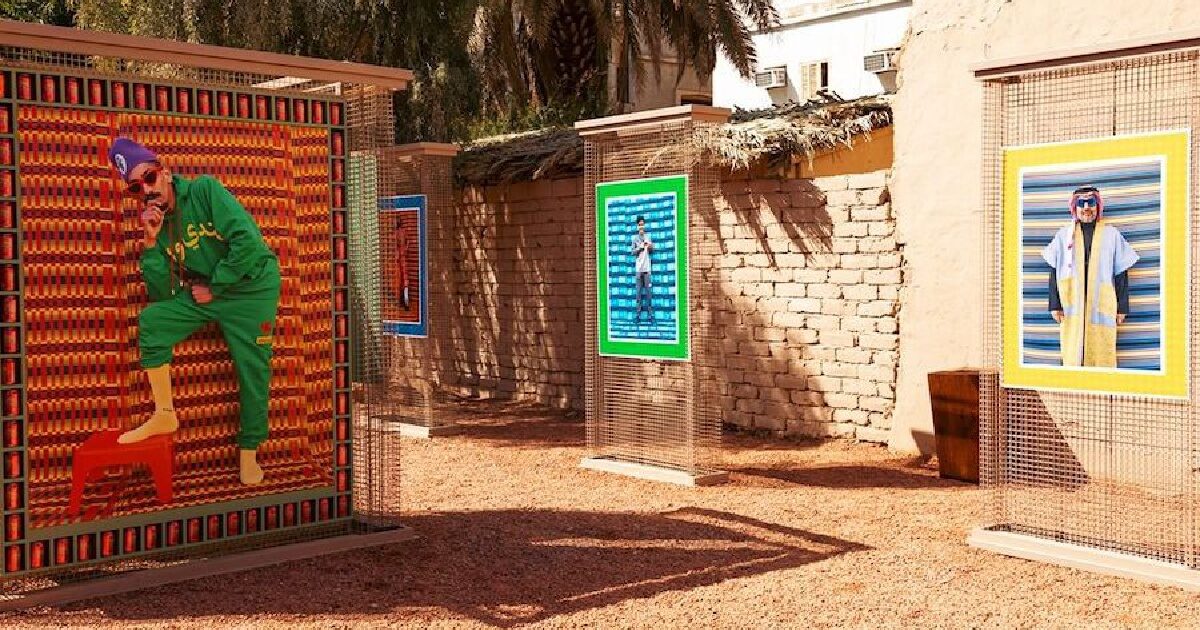
AlUla is an ancient oasis in the desert of northwestern Saudi Arabia, a valley of sandstone and palm groves that the country has been rebuilding into a cultural destination. Hajjaj's visual language scaled up to that institutional setting without losing the intimacy that built it. His residency with the Royal Commission for AlUla coincided with an official Andy Warhol exhibition at Maraya, the mirror-clad concert hall nearby, framed as an Arab interpretation of pop art, a framing his method refused entirely. Working from Madrasat Addeera, a former girls' school suspended in time, he photographed shepherds, merchants, football teams, artisans, and international figures inside the same compositional structure, so the hierarchies between subjects flattened without anyone's specificity being lost. He titled the show by the Hijri year, the Islamic lunar calendar Muslims count their days by, a quiet insistence that the work be located in its own time rather than measured against the Western one. Installed throughout the AlJadidah Arts District, the portraits let the people inside them encounter themselves at monumental scale, inside the exact landscape that produced them.
Sharjah, 1434
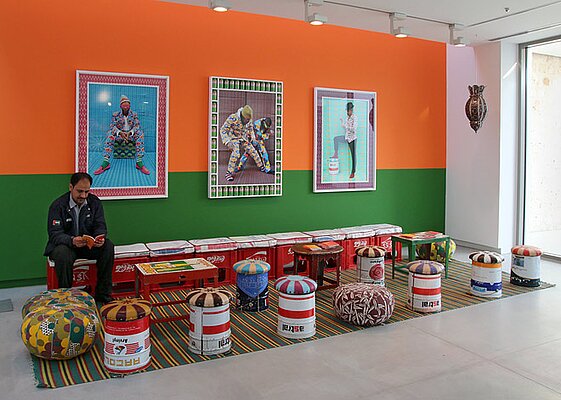
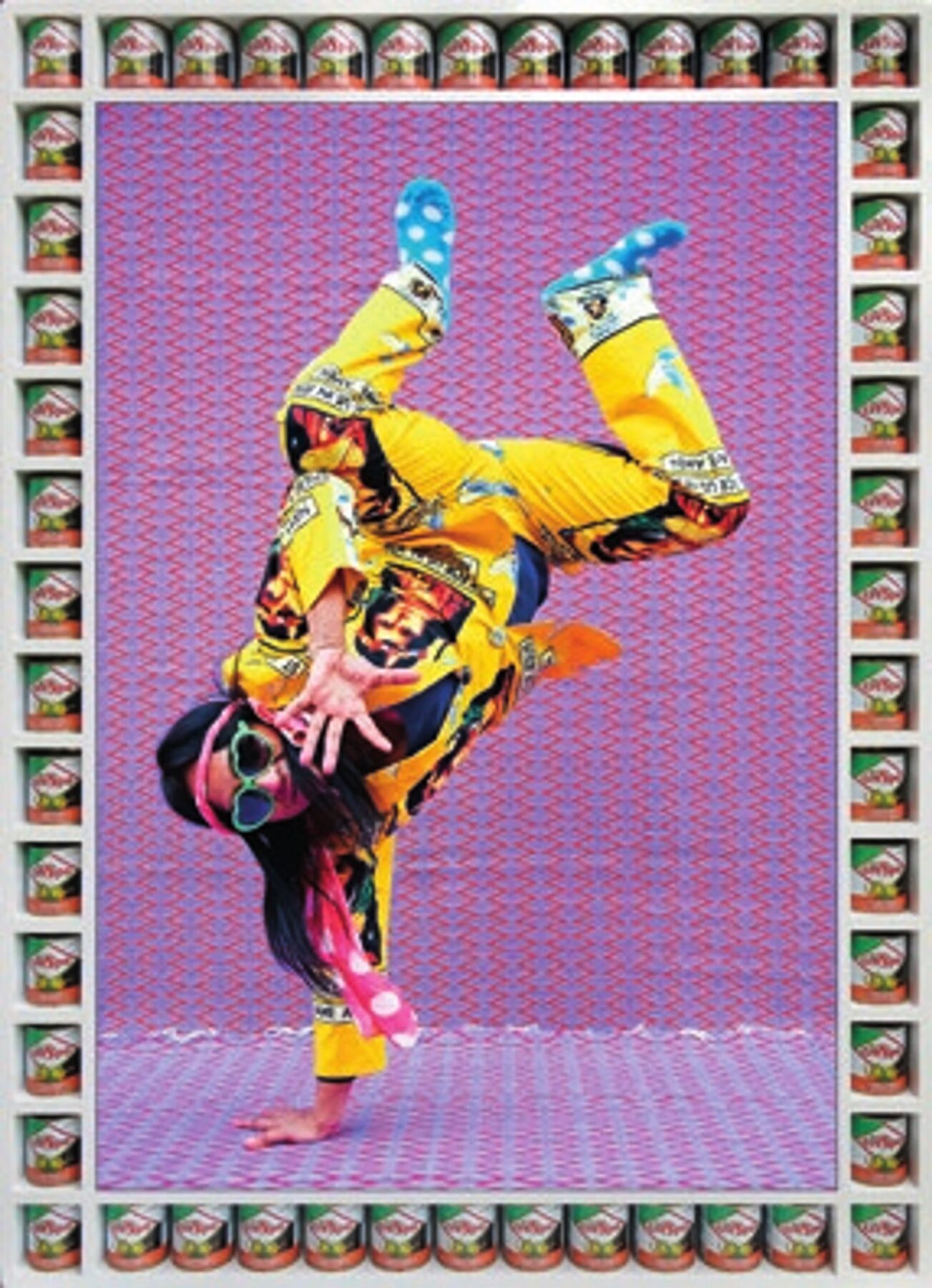
The same gesture travels: Hajjaj's practice has long extended past the photographic print into full salon environments. At the Sharjah Art Foundation, his installation Chaos into Clarity: Re-Possessing a Funktioning Utopia turned the gallery into a meeting room: recycled-container stools, custom benches, and framed prints from the My Rockstars series, arranged so visitors sat together inside the work rather than walking past it. The familiar logos and pop textures on his frames do quiet work here too, lowering the threshold of the gallery for people who have rarely felt invited inside one, and widening who gets to belong to fine art.
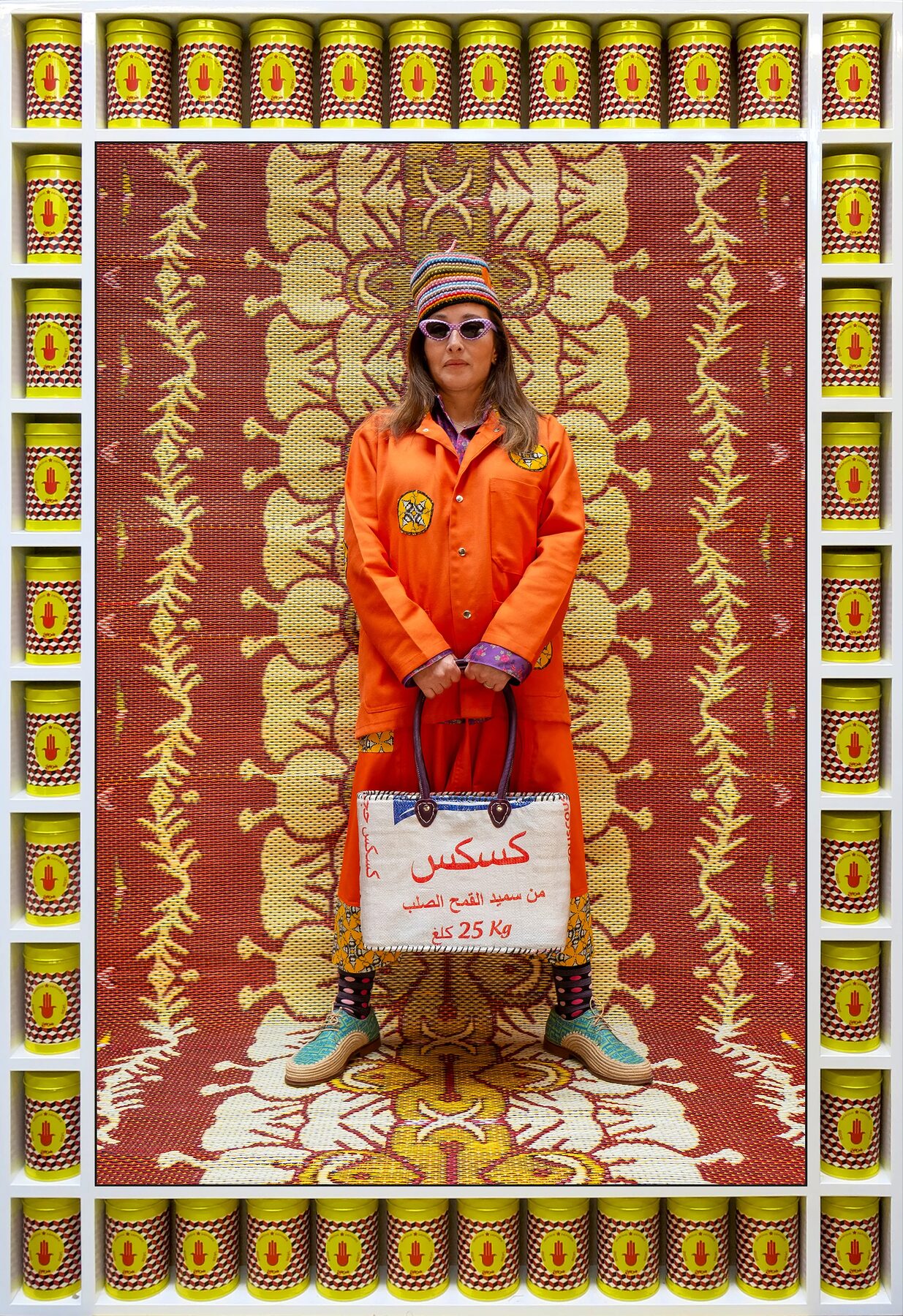
The same design runs through his more recent shows. In May 2026, 193 Gallery opened Venice, 1447, the second Hassan Hajjaj exhibition in its Venice space, dated again in the Hijri calendar. As he does with every work, Hajjaj prints both dates side by side, Gregorian and Hijri, so the region's lunar calendar travels inside the picture into the art capitals of the West. In London, he runs Larache Shop, a hybrid boutique, archive, and meeting place; in Marrakech, his riad Jannah operates as an open residency and incubator for younger artists from the SWANA region (South West Asia and North Africa) and the wider African continent.
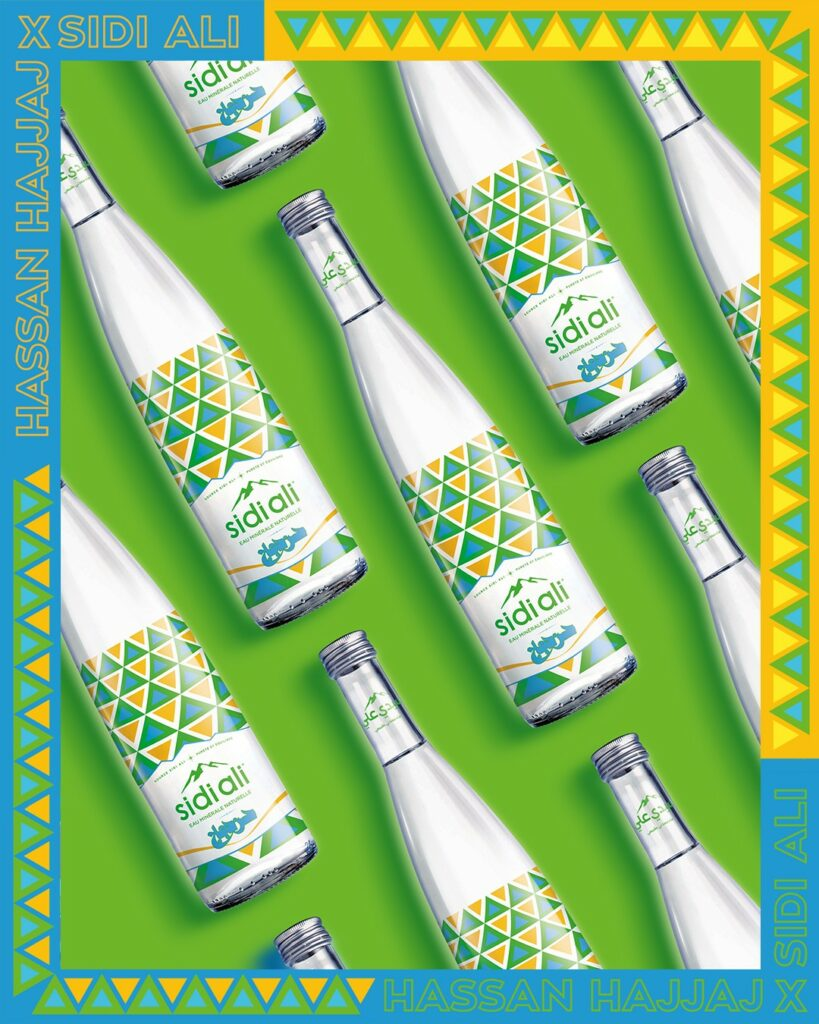
The same design runs through his commercial work: Warhol turned icons into commodities, and Hajjaj turns commodities into shared memory. For the Moroccan mineral-water brand Sidi Ali, he designed a series of limited-edition bottles (Water Bliss, Cheery Sun Flower, and Mama Africa) wrapped in his signature pattern and colour. What makes the collaboration unusual is where it pointed: proceeds went toward modular housing for families displaced by the Al Haouz earthquake, built with the association INSAF. The object stays intimate and local, tied to the people it came from rather than lifted away from them.
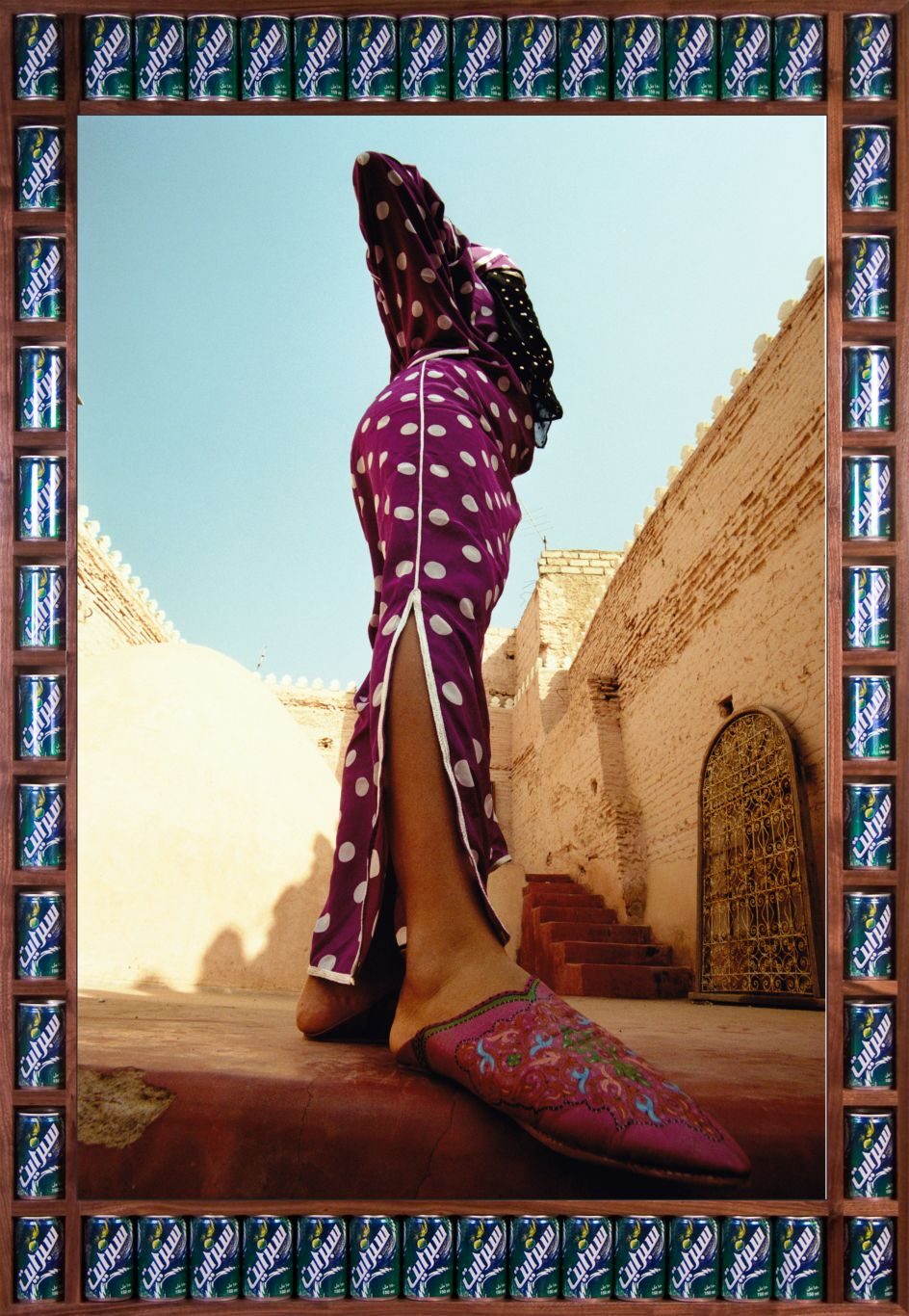
Back inside MACAAL, the cans, the shelf, and the knockoffs all stay visible. The frame is an act of placing: not just showing the image but setting it inside an archive of trade, migration, home life, and survival. The work carries its own logic, its own materials, its own social grammar, and it asks to be read on those terms rather than borrowed ones. Hajjaj was never working in Warhol's shadow, and never asked to be measured against him. This is the politics of the surface: what looks ornamental is in truth a record of how people live and hold on. It is the same conviction baqaya is built on: that the material of everyday life carries our history, and is worth keeping and reading closely.
“Many artists from North Africa and the Middle East aren't allowed to be their own thing. They have to be like someone from the West. So you become secondary. But it doesn't bother me; I find it funny more than anything.”
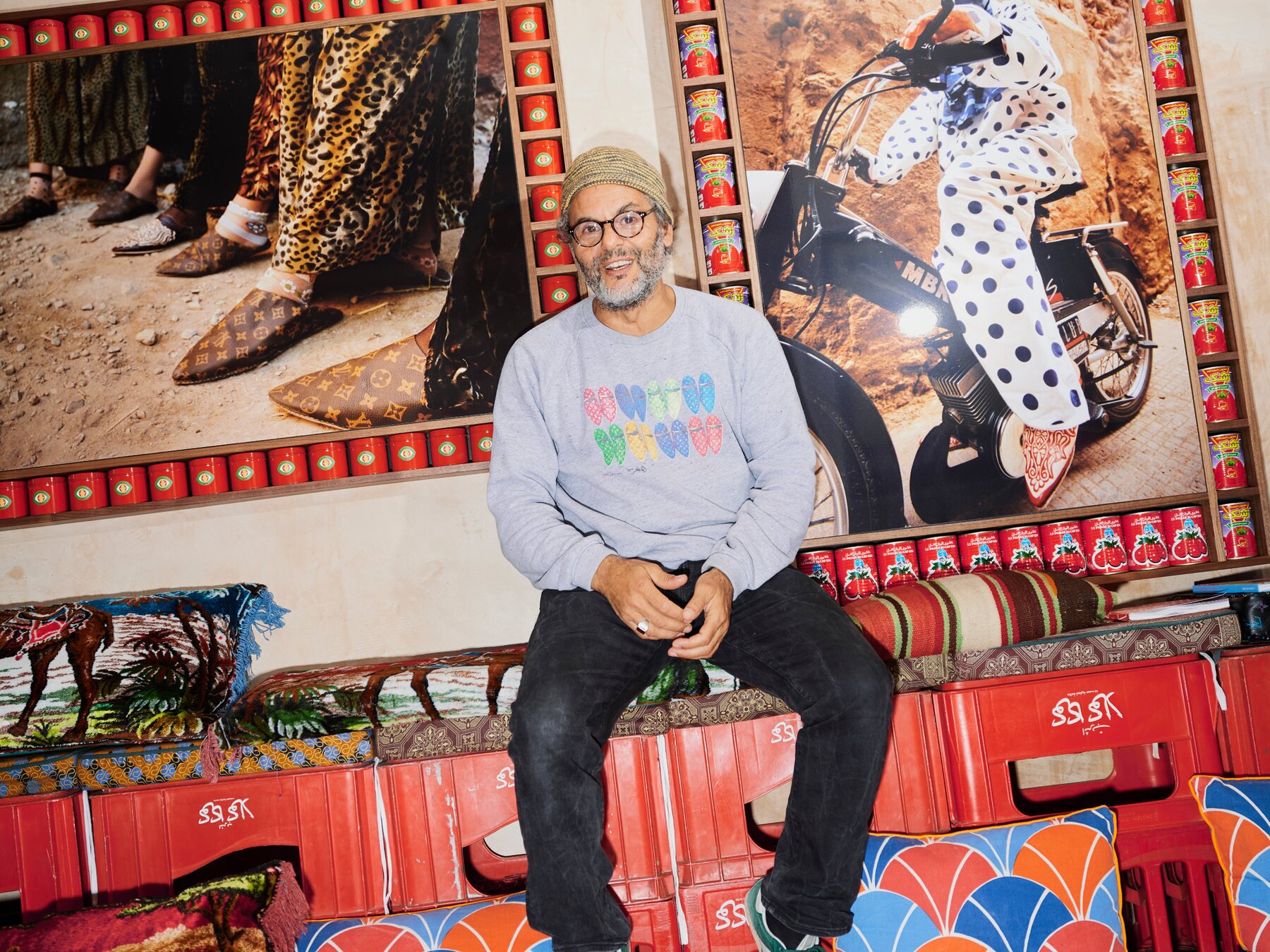
This is the conversation baqaya exists to advance.